
When you look at the sea, can you see bacteria? Would you swim in it if you could? Sometimes the signs of water pollution are obvious; there might be slick on the water’s surface, floating sanitary products and lumpy toilet roll sludge. Other times it might wash up on the shoreline in certain tide conditions. However, the absence of more obvious pollution does not guarantee water quality. To prevent sewage related illness through swimming we must treat sewage properly to tertiary level, and publicly monitor and report on water quality to allow the public to make informed decisions.
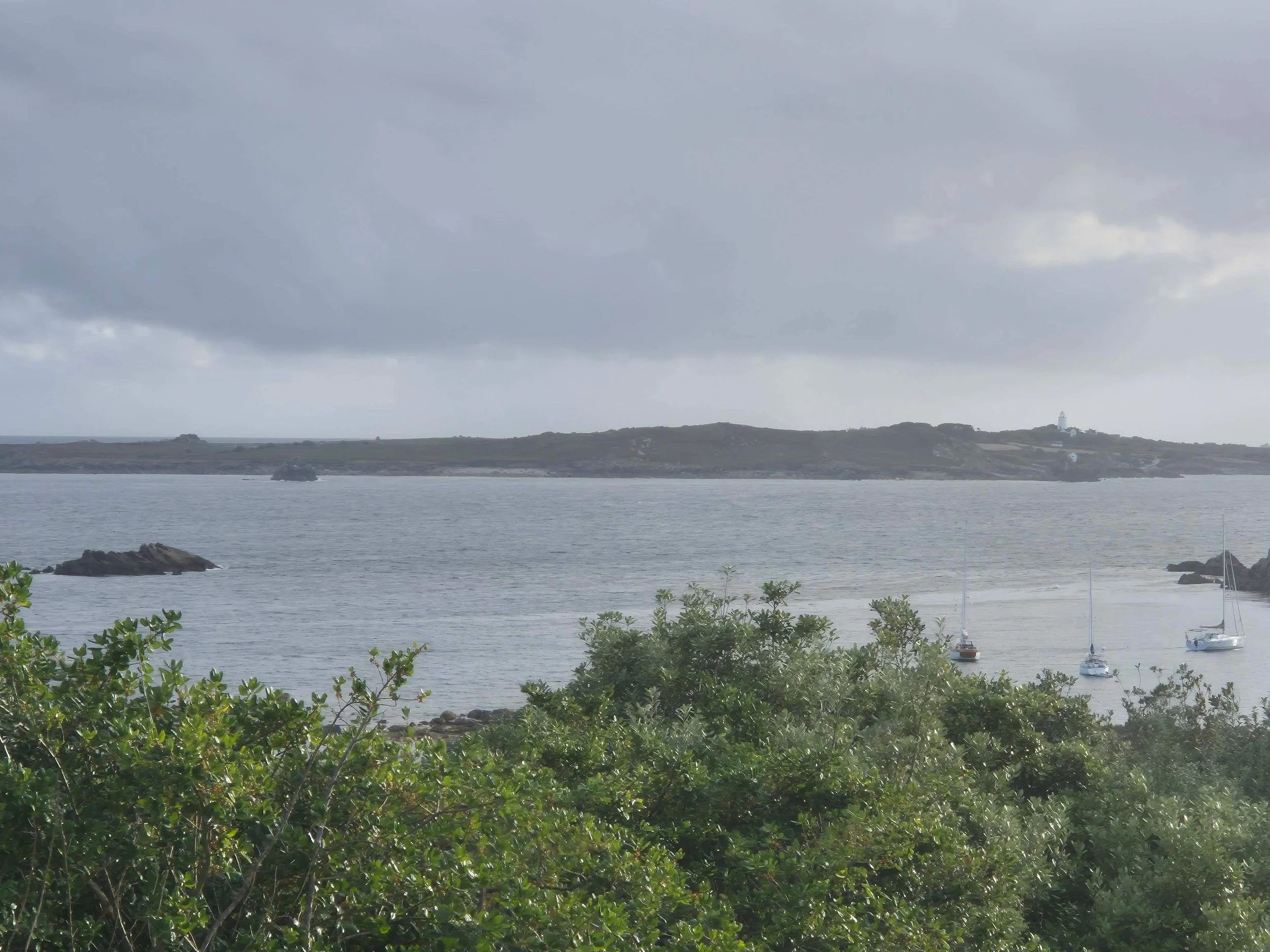
A view across to Morning Point, St Mary’s: a sewage slick and trail is visible in the water following routine raw sewage discharge.
Sewage Sickness
Across the UK, an increasing number of swimmers are reporting sickness following unknowingly swimming in sewage-polluted water. National campaigns are calling for improved water quality and reporting, supported through the official designation of Bathing Waters. Tragically, lives have even been lost due to sewage pollution, and these deaths could have so easily been prevented. Eight year old Heather Preen lost her precious life after swimming in contaminated water; if the sewage spill was clearly reported for the public, or if the sewage had been treated to tertiary level with UV disinfection, Heather may still have been alive today; in Heather’s autopsy report the coroner advised that these things should happen in future. This is something Chris Hines, co-founder of Surfers Against Sewage, has been fighting for in the UK ever since. His tireless campaigning even saw him swim into a UV treated sewage outflow pipe to demonstrate how much safer sewage is when it is treated properly.
A group of residents on St Mary’s want to make sure that the water quality is protected and preserved for years to come, and to make sure that sewage-linked tragedy never strikes the families that live on or visit Scilly. They initially hope to apply for Bathing Water status for Porthcressa (inclusive of Little Porth), Porthmellon, and Old Town Bay, as the busiest beaches on St Mary’s; particularly in light of concerns surrounding historical, current and proposed improvements to sewage management on the islands, and Environment Action Scilly’s campaign for the best possible sewage treatment for Scilly.
Applying for bathing water status on scilly
As part of the application, residents, visitors, businesses and services must have an opportunity to respond to a public consultation: please support the application by completing this short consultation to share your views, even if you feel there is reason not to support it. Please also share the consultation with Scilly businesses and friends or family who you would like to respond. All responses will be submitted to DEFRA as part of the submitted applications.
Permission for the application to DEFRA has been sought from the Council of the Isles of Scilly and the Duchy of Cornwall. This is a necessary step due to both organisations being land owners, and the Council acquiring a duty to display water quality status and details of pollution incidents through the use of signage. Both are currently deciding whether to support the application or not, however, the Council and Duchy will not gain regulatory responsibilities for the pollution, water quality or testing: these responsibilities for water management and monitoring will remain with South West Water and the Environment Agency.
Bathing Water quality is monitored by the Environment Agency during bathing season, which falls between 15th May and 31st September each year. Water is graded ‘Excellent’, ‘Good’, ‘Sufficient’, or ‘Poor’ following regular testing for E Coli and intestinal Enterococci, and this grading can help swimmers decide whether it is safe to use the water. The status reported on long-term signage is not live or ‘real-time’, however the duty to add public signage warning against bathing and to inform about recent and/or active sewage pollution incidents as they occur, is an additional protective measure for the general public. These designations also enable other organisations, like Surfers Against Sewage, to send live updates to members subscribed to a certain location through their maps if licensed outflows begin to discharge.
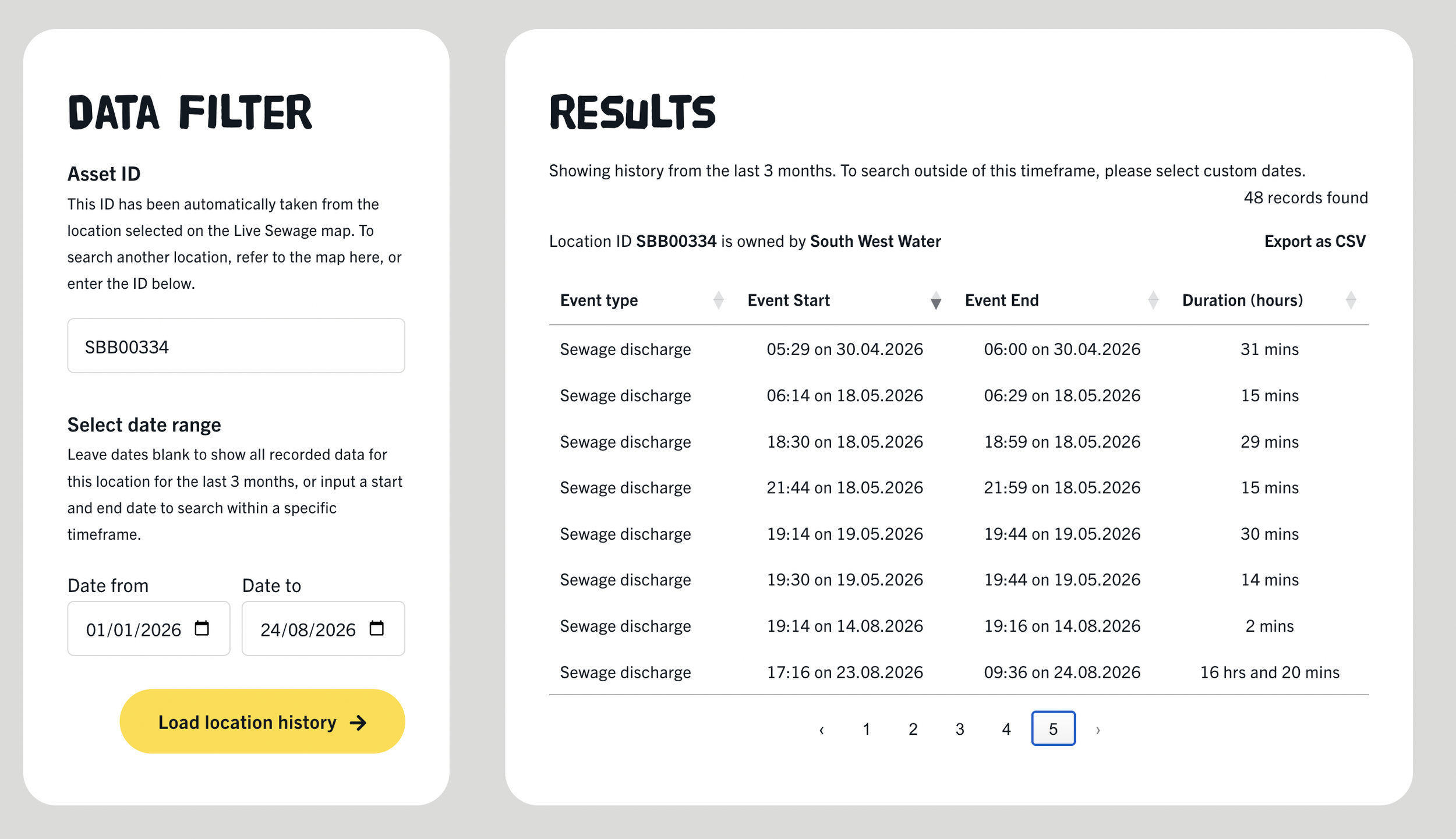
Surfers Against Sewage Live Sewage Map feature highlighting a 16 hour spill from St Mary’s ‘Combined Sewer Overflow’ from 23rd to 24th Aug 2026 - the longest spill in a total of 48 so far this year.
Recent Sewage spill reports
During a gloriously sunny day at 5.16pm on Sunday 23rd August, the Atlantic Combined Sewer Overflow (CSO) on St Mary’s began discharging raw sewage into the waters of Town Beach on St Mary’s. The spill occurred for sixteen hours and twenty minutes, but unfortunately there were no signs put up warning people not to swim, as Town Beach is not a designated Bathing Water. Residents were advised against swimming there online after the spill had finished on the morning of Monday 24th April. We hope that visitors and residents who spent their sunny Sunday afternoon bathing with their families on Town Beach do not experience sewage related sickness, though if anyone does it can be reported here.
routine sewage discharges
The position of the once-long-now-short sea outfall pipe at Morning Point, St Mary’s, has been somewhat protective for swimmers on Porthcressa. With the exception of occasional unexplained upset tummies or recurring ear infections, we are unaware of any serious illness from the very long-term, routine raw sewage discharge that occurs on St Mary’s every 15 to 60 minutes under the terms of the Environment Agency’s Local Enforcement Position (LEP). As the LEP temporarily removes the necessity for an Environmental Permit for the Morning Point pipe, there are never reports of raw sewage discharges from this location, despite them happening all day, all year.
A new long sea outfall site at Porth Minick, Old Town, was chosen by South West Water as part of the recent improvement proposals required to bring St Mary’s infrastructure in line with water legislation. Improvements must be made before the extended September 2027 LEP deadline. Significant concerns have been raised about this site by residents due to the tidal flow around Porth Minick, Old Town Bay, and Porth Hellick, and especially in light of South West Water’s late commitment to secondary sewage treatment, but still not to tertiary UV disinfection. This site would simply not offer the same luck that has protected swimmers from Scilly’s sewage until now.
Bathing Waters Change Waste Water Legislation
The presence of designated bathing waters can alter how wastewater legislation is applied; if sewage discharge may affect water quality, they can become classified as sensitive waters and are required by law to have more stringent sewage treatment. This is to protect public health and the environment. It costs water companies less money to treat sewage to tertiary level with UV disinfection than it does to build long-enough sea outfalls to take the pollution offshore.
Applying for Scilly’s first designated Bathing Water Status’ is one of the simplest ways to support the campaign for the best possible sewage treatment for Scilly, to protect our environment, our wildlife, and most importantly our people.
